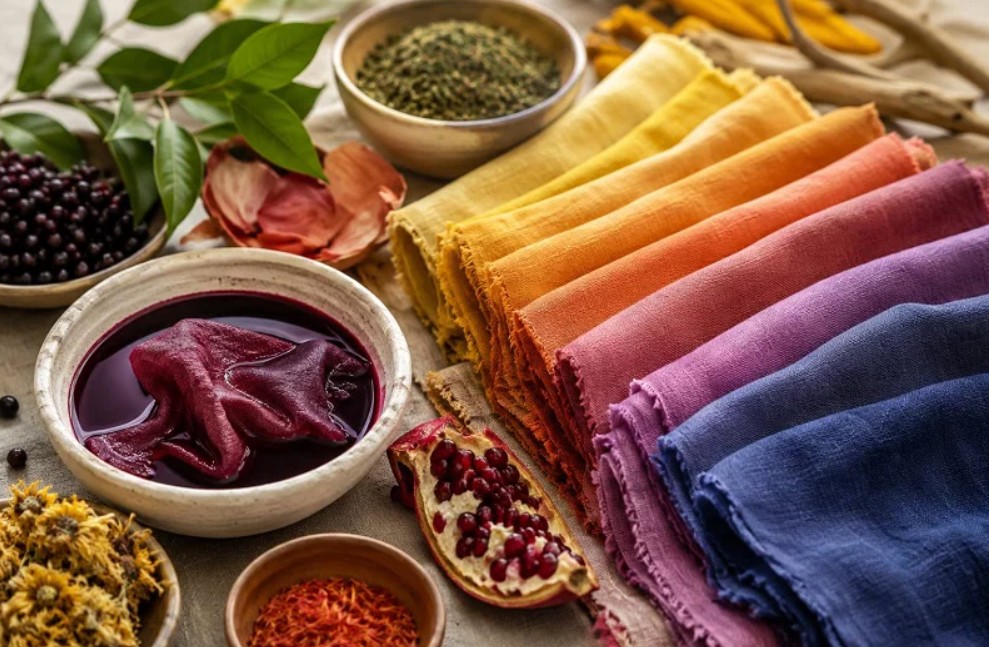
Natural colors from plants have long been hailed as a purer alternative to synthetic dyes. But they have one major weakness: they fade far too quickly.
Now, researchers have developed a new dyeing method that allows plant-based dyes to stay on textiles for much longer – without the use of environmentally harmful metal chemicals.
Read: Dele Alli gets help to save his career in London – after chance meeting in Marbella
The study, published in the International Journal of Materials and Product Technology, describes a metal-free fixation process that can make plant dyes far more practical – both for everyday clothing and technical textiles.
Eco-friendly colour – with one big challenge
The textile industry has been looking for greener dyeing methods for years. Conventional dyes and chemicals contribute to serious water pollution. Natural dyes from plants are biodegradable and have a far lower environmental impact than their synthetic siblings.
But they have a serious weakness: the color washes out, fades in sunlight and loses intensity after only a few weeks of use.
The reason is that plant dyes do not adhere naturally strongly to textile fibers. Therefore, manufacturers have traditionally used so-called grazing agents – often metal salts – that help the dye molecules bind to the substance. This improves color fastness, but creates a new problem: the metal salts become major contaminants in wastewater from textile factories.
Removing these toxic residues is both difficult and expensive.
Natural solutions – from the sea and forests
Now researchers have found a completely new way. Instead of metals, they have developed a fixation system based on two natural ingredients:
- Modified chitosan – a material extracted from chitin, which is found in the shells of shrimp, crabs and other crustaceans.
- Ellagic acid – a natural compound found in berries, pomegranates and nuts.
Together, these two ingredients create gentle yet effective chemical forces that hold the dye molecules in place in the fabric. Two mechanisms are particularly important:
- Electrostatic attraction – opposite charges hold the molecules together.
- Hydrogen bonds – a regular and stable chemical interaction that adheres to the color without damaging the fabric.
The researchers also fine-tuned the dyeing process itself by adjusting temperature, acidity and steam treatment. The goal was to maximize color absorption while preserving the fabric’s other properties.
Washable 25 times – and keeps its colour
To test the method, the researchers applied it to antibacterial textiles – fabrics designed to resist the growth of harmful bacteria. The results exceeded expectations:
- After 25 wash cycles , around 70% of the dye was still left in the fabric.
- The fabrics showed very good resistance to fading from water and light over time.
- The antibacterial properties held up remarkably well – over 90% of the effect was preserved after repeated washing.
This is a significant improvement compared to many traditional plant dyeing methods.
The future: Cleaner fashion and smarter textiles
The researchers believe the new method can help expand the use of natural plant dyes in several industries – from sustainable fashion to medical textiles and other specialty fabrics that require both durability and functionality.
By replacing polluting metal grazing agents with naturally derived materials, the method takes an important step towards cleaner textile production. At the same time, eco-friendly textiles are finally becoming more convenient for consumers.
For the first time, plant dyes can actually last – without nature having to pay the price.
Billie Eilish shocks fans with first look from ‘The Bell Jar’ filming