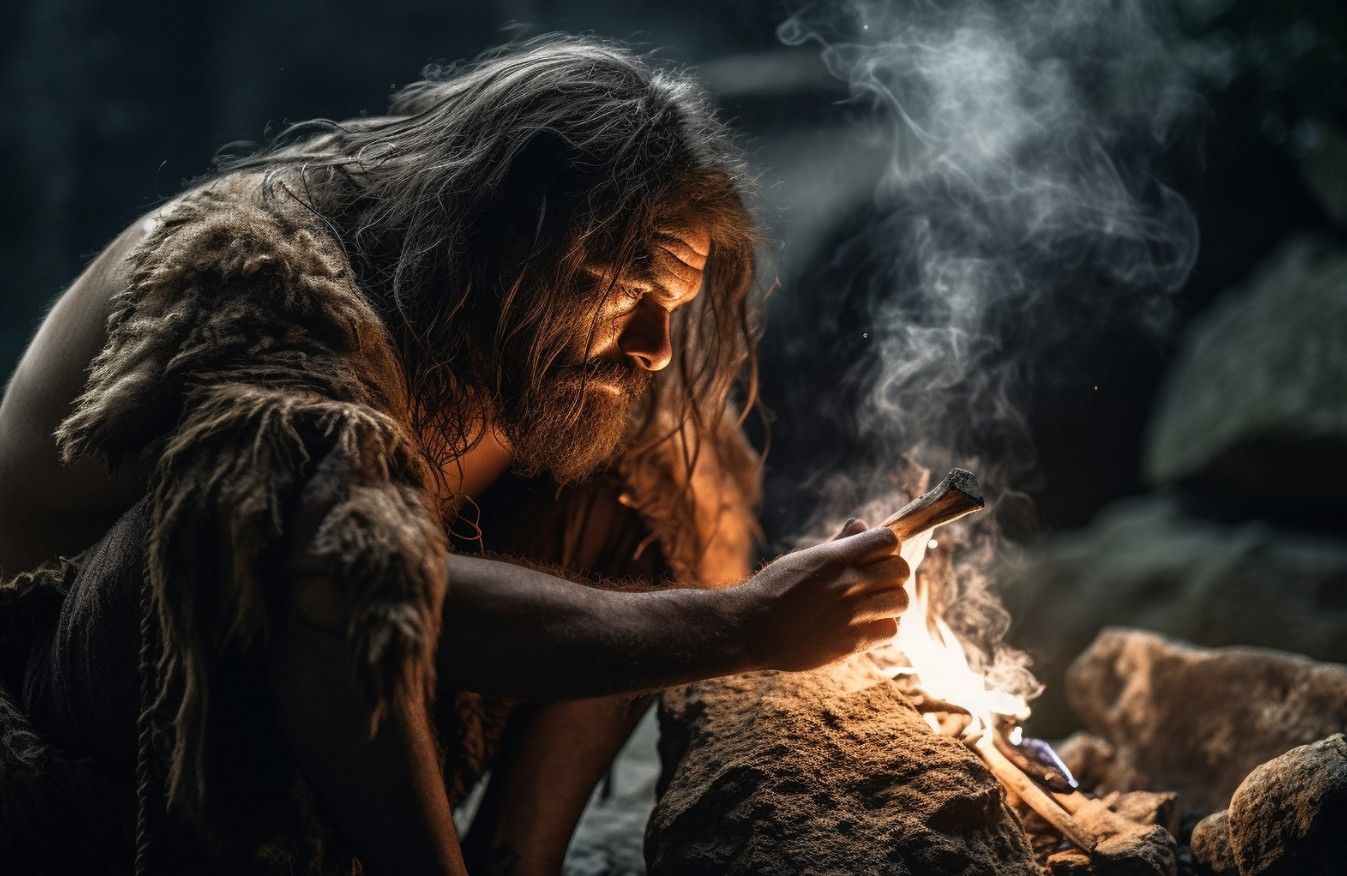
Many of us carry small pieces of DNA inherited from Neanderthals – our ancient human relatives who disappeared tens of thousands of years ago. These genetic traces provide a remarkable insight into the encounters between different groups of people in our distant past.
In an interview published by Harvard University, geneticist David Reich explains how this inheritance became part of modern human populations.
The untouchable Gianni Infantino laughs at us all
Most people of non-African descent carry around 2% Neanderthal DNA – although both the exact amount and the pieces inherited vary from person to person.
Neanderthals mainly lived in Europe and parts of West and Central Asia. When groups of modern humans began to spread out of Africa, they met Neanderthals—and had children together. Over many generations, these families became part of larger populations.
The mixing appears to have occurred especially when modern humans moved through the Middle East and further to other regions more than 50,000 years ago. Because descendants of these populations later spread widely, Neanderthal ancestry is now found among humans across much of the world.
More complicated than that
The amount of inherited DNA may be similar in Europe and East Asia – although Neanderthals are often associated with European fossils. There is a hint that ancient migration and population mixing were more complicated than a simple story of one group replacing another.
Some hereditary variants affect biological traits. Researchers have linked certain ancient genetic changes to pigmentation and certain disease risks. Other ancient relatives—the so-called Denisovans—also contributed genetic variants, including one linked to adaptation to height in Tibetan populations.
Genes do not determine who you are
However, carrying a Neanderthal variant does not determine anyone’s health or identity. Most traits reflect the combined influence of many genes, environment, and personal circumstances. Researchers are still working to find out what much of this inherited DNA actually does.
Ancient DNA has also revealed individuals with surprisingly recent mixed ancestry – including a person from about 40,000 years ago, whose family tree included a Neanderthal just a few generations earlier.
The proportion of Neanderthal ancestry is an average across the genome—not a measure of how closely someone resembles an ancient human. Different people carry different fragments, and some parts have disappeared over thousands of generations.
The puzzle from the past
Researchers can compare modern genomes with DNA taken from ancient bones to reconstruct parts of this history. Such comparisons are powerful – but they also depend on which ancient remains have survived and where these samples were found.
Taken together, the evidence shows that human history was shaped by movement, contact, and marriage between peoples. Instead of separate branches that never met, ancient human groups were interconnected in ways that are still visible in our genomes today.
Cristiano Ronaldo films with Hollywood stars