It may be a good idea to stop for a moment and think how big this actually is.
Alexander Fleming had been researching bacterial growth for a decade when he accidentally discovered penicillin almost 100 years ago – Estimates are that this discovery has saved over 200 million lives and shortened periods of illness for billions of cases.
Every minute, over one million plastic bottles of water are purchased worldwide! Why do we continue?
But there is a downside, just as someone who wants to cross a wall takes a higher ladder with him, if the wall gets higher, many and more and more bacteria are resistant to antibiotics. Overuse, especially in agriculture, has accelerated the development of resistance.
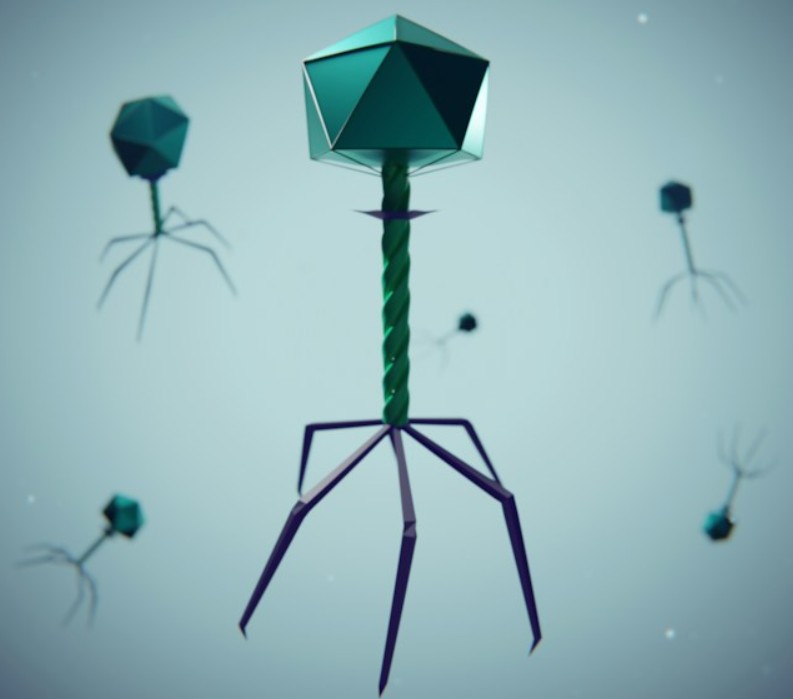
Viruses that attack bacteria could one day become a key in the treatment of infections that have become resistant to antibiotics. They could also provide us with ways to protect crops with fewer chemical treatments.
The problem is that scientists still don’t know what many of the genes in these viruses actually do – and without that knowledge, it’s difficult to use them reliably.
Now, a team at the University of Otago in New Zealand has developed a method to both study these genes and add new ones.
The work, which has been published in Nature Microbiology, can make it much faster to investigate and modify bacteriophages – usually just called phages.
Phages infect bacteria, not human cells. Some of them destroy the bacteria they attack, which makes them very interesting as possible treatments.
However, before researchers can assess whether a particular subject is suitable for a particular task, it must be thoroughly understood.
Professor Peter Fineran, lead author of the study, points out that many phage genes are still a mystery.
The new method helps reveal what happens when these genes are disrupted. The researchers use a mobile piece of DNA, called a transposon, that can insert itself into different places in an organism’s genetic instructions. If it lands in the middle of a gene, it can knock the gene out of play.
The team then uses a system based on CRISPR – the bacteria’s own defence against viruses – to select the subjects where the insertion has been successful. By mapping where insertions can and cannot be found among the subjects that survive, the researchers can identify which genes are essential for the virus, and which it can do without.
This insight can make scientific research far more systematic. Instead of unravelling one unknown gene at a time, researchers can now examine changes in an entire genome and form a clearer picture of how it works.
The researchers also showed that the inserted DNA can carry an extra gene. In future research, the same approach could be used to give phages new useful properties – for example, better ways to penetrate the bacteria’s defenses.
One possible application is to attack biofilms. These are bacterial communities that adhere to surfaces, such as medical implants, and can be very difficult to remove. In the long term, modified phages can help reach the bacteria that hide inside them. The method can also support research on phages for use in agriculture.
These possibilities remain to be tested. Adding a gene to a phage in the laboratory does not mean that the finished virus is safe or effective as a treatment. Researchers need to investigate how it behaves against target bacteria – and under real conditions.
For now, the breakthrough gives researchers a better way to ask the fundamental questions. By learning which phage genes matter, and how they work, researchers can take more informed steps towards using these bactericidal viruses.
Ultra-processed food can increase the risk of chronic diseases