The possible, the plausible, the sci-fi and the really, really strange…
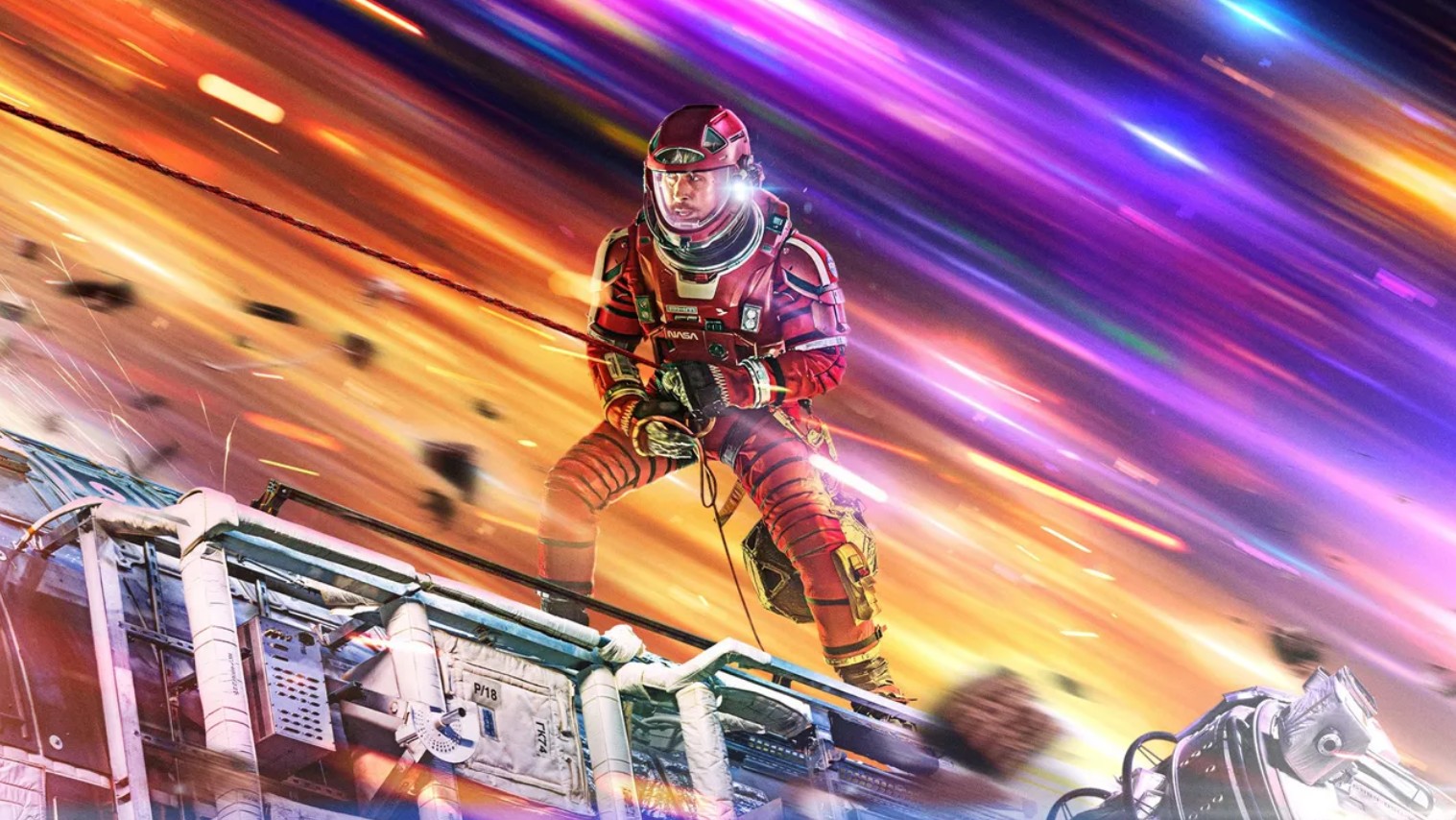
Lord and Miller’s Project Hail Mary is a big-hearted space adventure that is basically about a friendship between Ryan Gosling’s random astronaut Ryland Grace and his spacemate Rocky. There’s a lot to like here: firstly, thousands of beautifully executed VFX images, but no green screen. Directors Phil Lord and Christopher Miller had their crew build the inside of the Hail Mary ship as a set, as well as parts of the ship’s exterior, and it really shows on the screen.
Read: What now that Chuck Norris is dead?
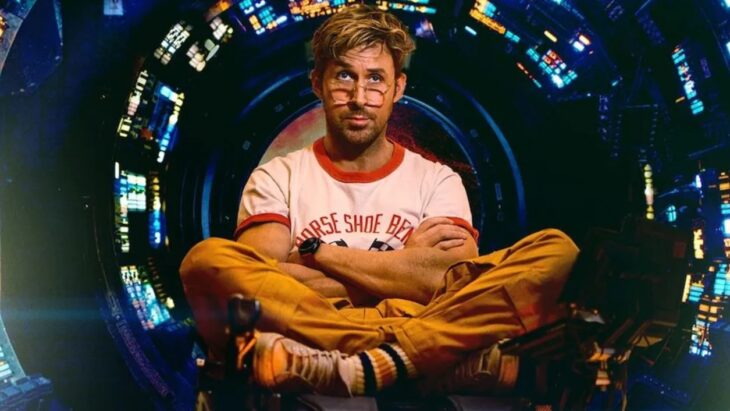
Gosling’s charm as an underdog and physical comedy is put to fantastic use – yes, you’ll laugh out loud, and probably cry – and Sandra Hüller as Stratt, the crass head of Earth’s international task force trying to save the world, almost steals the film.
Then there is the research. Project Hail Mary is based on Andy Weir’s “hard sci-fi” book of the same name, published in 2021, six years after his previous novel The Martian was adapted from Ridley Scott’s space blockbuster starring Matt Damon. (Get him home!).
Project Hail Mary: From the Sunday Times Bestselling Author of the Martian – Now a Major Motion Picture Starring Ryan Gosling
An irresistible adventure in space as only Andy Weir could imagine, Project Hail Mary is a tale of discovery, speculation and survival that rivals The Martian – all while taking us to places it never dreamed of going.
Both times, screenwriter Drew Goddard has been responsible for the adaptation from book to script. While you can never fit as much science in a movie as you do in a book, Andy Weir uses legitimate physics to invent his fictional planets, organisms, and materials. When it comes to space travel, gravity, and G-forces, Weir also does the real calculations. Let’s dive into what’s really going on when Ryland Grace conducts experiments in argon-filled labs and galaxy brain equations on the spaceship’s blackboard twelve light-years away…
Read on Sporten: A fantastic Uwe Rösler impresses in Germany!
The sun is getting weaker
The main premise of Project Hail Mary is something like this: a Russian scientist named Irina Petrova discovers an infrared line in our solar system between the Sun and Venus. The instruments on board a Japanese JAXA probe called Amaterasu then pick up solar measurements that show that as this “Penova line” becomes clearer, the Sun – the Sun itself – becomes fainter. For starters, it’s 0.01% less bright than it should be.
The disaster? As Ryland Grace, who at the beginning of the story is a high school science teacher, learns from a fellow researcher in the book: “The sun’s effect will fall by a full percent over the next nine years. In twenty years, that figure will be five percent. This is bad.” How bad? Well, the immediate ice age on Earth bad.
Professor Mathew Owens is Professor of Space Physics at the University of Reading. He is a fan of both Andy Weir’s books and sci-fi short stories by authors such as Ted Chiang, one of which, Story of Your Life, was adapted from Denis Villeneuve’s 2016 film Arrival. Owens’ scientific research includes space weather forecasting – predicting a few days in advance what the sun will do and how it affects satellites, power grids and astronauts in space – and space climate, which looks at how the sun has varied over hundreds of thousands of years.
“What causes ice ages is not that the sun itself changes, but that the Earth’s orbit changes slightly,” Owens explains.
“The Earth’s orbit changes a little over hundreds of thousands of years, and in particular our rotation poles tend to tip towards the Sun and away again. It changes the amount of sunlight we get in specific areas. These are believed to be the main causes of ice ages.”
In the case of Weir’s fictional Amaterasu probe, there are actually a couple of interesting solar-focused spacecraft out there, including NASA’s Parker Solar Probe, which recently made its 27th “orbit” around the Sun this month at a distance of just 3.8 million miles, and ESA’s Solar Orbiter: “The Solar Orbiter has several telescopes that do more of the kind of measurements that are in the book, while the Parker Probe only measures the material that is around it at any given time.”
Scientists can reconstruct the sun imprecisely over very, very long timescales (i.e., previous ice ages on Earth), but Owens focuses on the last thousand years. If you’ve seen the Northern Lights in the UK in recent years, you’ve experienced the results of the eleven-year solar cycle of brighter and dimmer periods.
“It’s about the sun’s magnetic field,” he says.
“It’s like a rod magnet inside the sun; It reverses the polarity every eleven years, so you get a full cycle every twenty years. During that time, the number of sunspots on the sun goes from almost zero to a few hundred, and then goes down again. We have observed this solar cycle back to about 1750. We get more space weather when there are more sunspots; In recent years, there have been a lot of northern lights because there has been a solar maximum.”
An area of interest for Owens is the Maunder minimum or “Little Ice Age” around 1650 to 1700, when there were very few sunspots, the dark spots, on the sun, and temperatures were quite cold in Europe. But, he says, this is drawing too quick conclusions in terms of cause and effect.
“The Sun was a little weaker during this period with few sunspots, so that will have contributed a little bit to the cooler temperatures,” he explains.
“But the main reason was probably volcanoes. They throw ash into the atmosphere, and it reflects the light away, so it’s actually more similar to the idea of Project Hail Mary – you don’t have ash reflecting the sun, you have ‘astrophages,’ as he calls them, absorbing the light before it reaches the ground.”
Otherwise, it would require serious geoengineering efforts by humans to achieve figures such as a 1% reduction over nine years and 5% over twenty years of sunlight reaching Earth – “putting sulphur in the atmosphere or something and reflecting some sunlight” – as even the Maunder minimum was only fractions of a percent lower.
Astrophages
Fast forward a few years in the sci-fi timeline of Hail Mary, and Earth has sent an ArcLight probe to the Penova Line to see what’s going on. They find moving black dots, tiny organisms, which Grace – after he is forced to join the mission based on a controversial molecular biology article he once wrote about extraterrestrial life not needing water – gives the name astrophages. Simply put: they live, and they migrate to CO₂ in Venus’ atmosphere to reproduce. They also “eat” or absorb the sun’s energy, and that is what constitutes the existential threat to life on earth.
Project Hail Mary author Andy Weir explained in an interview with the New York Times that he came up with the idea of an extraterrestrial fuel for “mass conversion” such as astrophages, which store very large amounts of energy in very small amounts of mass, before actually landing on the doomsday scenario of the Penova Line, the Sun’s weakening and the consequences for our planet:
“What if we found some kind of extraterrestrial fuel independent of a spaceship? But then you use it, and it’s gone. So you need to be able to make more fuel with the fuel itself. What if it absorbs energy and makes more of itself? It sounded a lot like life. There must be a reason why the fuel ended up on Earth. If you’re a mold or something, you almost have to live on the surface of a star to get enough energy to do so. So I made astrophages, which are a kind of algae. But instead of living in the ocean, it lives on a star and tracks out to other stars.”
Weir also says in the New York Times conversation that the only “true violation of physics” in the entire book is at the quantum level: in the story, astrophages are able to store neutrinos using Weir’s fictitious mechanism of “super-cross-section.”
Amateur astronomers gather
One of the heartwarming details in Weir’s book is that the mighty Stratt and her international research directors are able to map astrophage “infected” stars other than the Sun and identify the star — Tau Ceti — that appears to be immune to astrophages, thanks in part to data collected from amateur astronomers. The Project Hail Mary space mission goes as follows: send three astronauts on a 26-year round trip to Tau Ceti, in a spaceship powered by astrophage fuel, to find out how they can recreate the solution on Earth. Tau Ceti is actually a true Sun-like star, just under twelve light-years away, and projects such as SETI have listed it as a target in the search for extraterrestrial life.
In the book, Stratt has access to page after page of brightness measurements from amateur astronomers around the world, normalized and corrected by supercomputers for weather and visibility conditions: Alpha Centauri, Sirius, Luyten 726-8 and so on. She explains to Grace that there is historical data logged in recent years: “It’s the amateurs who log data about local things. Like togglers. Hobbyists in their backyards. Some of them with tens of thousands of dollars worth of equipment.”
Professor Owens points out that professional astronomers actually also study local stars and planets – for example, by pointing the James Webb Space Telescope at Jupiter – but that citizen science projects such as Solar Storm Watch are able to ask people with amateur setups around the world to participate. In this case, to look for large bursts from the Sun on telescope images and track how fast they move via multiple images.
“I have a PhD student named Sarah Watson, and she has been using comet observations to study the solar wind,” he says.
“Comets are in the solar wind, and when structures move past them, you see their tails wobble like little tadpoles, but many of these comet observations have been made by amateur astronomers. You have amateurs who have pretty good setups, and we can observe the comet 24 hours a day because they’re scattered around the Earth.”
Physics is fun
Another core part of Project Hail Mary is a pure, dizzying enthusiasm for scientific experiments. In the film, Ryan Gosling’s Ryland Grace simply looks out of the spaceship’s window to determine that he has woken up with no memory of how he ended up there or why, in space. In the book, Weir limits Grace to Hail Mary’s sleeping area and laboratory in the first scenes, which means he has to do everything from dropping test tubes, timing droplets with a stopwatch, and acceleration calculations to figure out how much gravity he’s experiencing. The bottom line: he is not on earth.
Both the movie and the book contain many plot-driven details around the Hail Mary ship’s centrifuge capacity to create artificial gravity and the way the theory of relativity affects how Grace and Rocky experience the length of their journeys to and from their planets. In a Project Hail Mary Reddit AMA in 2025 – which is well worth reading in its entirety – writer Andy Weir wrote that “in terms of research, people think I have a contact list full of scientists at NASA, which I do, but Google is faster,” and he told the New York Times that “for the movie, there was a lot that was just like, ‘Hey, trust us’. Hopefully, you’ll believe us when we tell you that if you accelerate by 1.5g that long, you’re experiencing about four years of time while the Earth has had 13.”
The result anyway is that we, the audience, get quite excited about physics. This is something that high school science teachers and even physics professors will recognize.
“I listened to the audiobook a few years ago, and I remember really enjoying those parts,” Owens says.
“I teach physics to freshmen, and one of the things you do is these thought experiments, like ‘if I took a pendulum and it was on a moving train, I would have the same value for g, the acceleration of gravity’. It’s nice to see someone else who enjoys it and makes use of it.”
Talking to aliens
When the Hail Mary reaches the Tau Ceti system, Grace discovers that an alien race – the Eridians of the 40 Eridani system – has decided to send scientists on the same journey to the same star for the same reasons; Their star also dies due to the astrophage invasion. The only survivor on the alien’s “Blip-a” ship is an engineer whom Grace names Rocky, due to his appearance as a friendly crab made of stone. In an interview with the BFI, the film’s co-director Christopher Miller said: “The other main character in this film is a space rock with no face. And you also have to fall in love with it. Finally, you have to think, ‘I would die for that stone.’ And if you don’t, it won’t work.”
Grace and Rocky’s first “conversations” are very imaginative in both the film and the book: dancing, jazz hands and thumbs up, fist-pounding, alien clocks and alien numbers, and, crucially, lots and lots of science. In the film, Rocky sends a model of the universe and the Penova line in a “xenonite” cylinder over to the Hail Mary to illustrate where he is from. Once they have made a tunnel between the two ships, he places a bracelet with two rings with eight beads through the airlock – which represents element number eight, oxygen, that is, it is safe for Grace to take off her spacesuit.
In the book as well, Rocky – who “sees” sound, but not light – communicates with elements, mathematics and materials. For example, he sends over 29 ammonia “collars” to explain his own Eridian atmosphere so that they can work together on the common mission. Essentially, all future first contact will always begin with science for safety and convenience. In the Reddit AMAut, in response to a question on the topics of friendship and perseverance, Weir wrote:
“I wanted to make a story about first contact, but first contact among nerds, really. Two aliens with a common goal working to solve it.” And elsewhere in the thread, he wrote: “Yes, I’m done with dystopias. I’m a positive person with a very positive outlook on humanity.”
“The Hail Mary thing is very similar to that poster on the Voyager spacecraft,” says Owens. Voyager 1 was launched in 1977 and has “been drifting away from Earth ever since”; it left the Solar System in 2012, with Voyager 2 soon after in 2018. The golden plate on board both Voyager probes contains sounds, data and images, and the first images are scientific: the solar system, DNA, human anatomy, animals, plants along with their mass, timescales and chemical compositions. There is also a pulsar map and a diagram of the hydrogen molecule, both of which were also included on the earlier Pioneer poster sent out in the early 1970s.
“The hope is that sometime in the future, someone will come across it. It tries to explain where it comes from without using any actual language, because that would be meaningless,” says Owens.
“So there’s this idea of how you would use science, something fundamental, like the hydrogen atom, because there’s no way an alien wouldn’t have encountered it. And then you might use something like the energy level distances in a hydrogen atom, because that would be a common frame of reference.”
Read: Miley Cyrus used Dolly Parton’s advice to bring about a Hannah Montana reunion