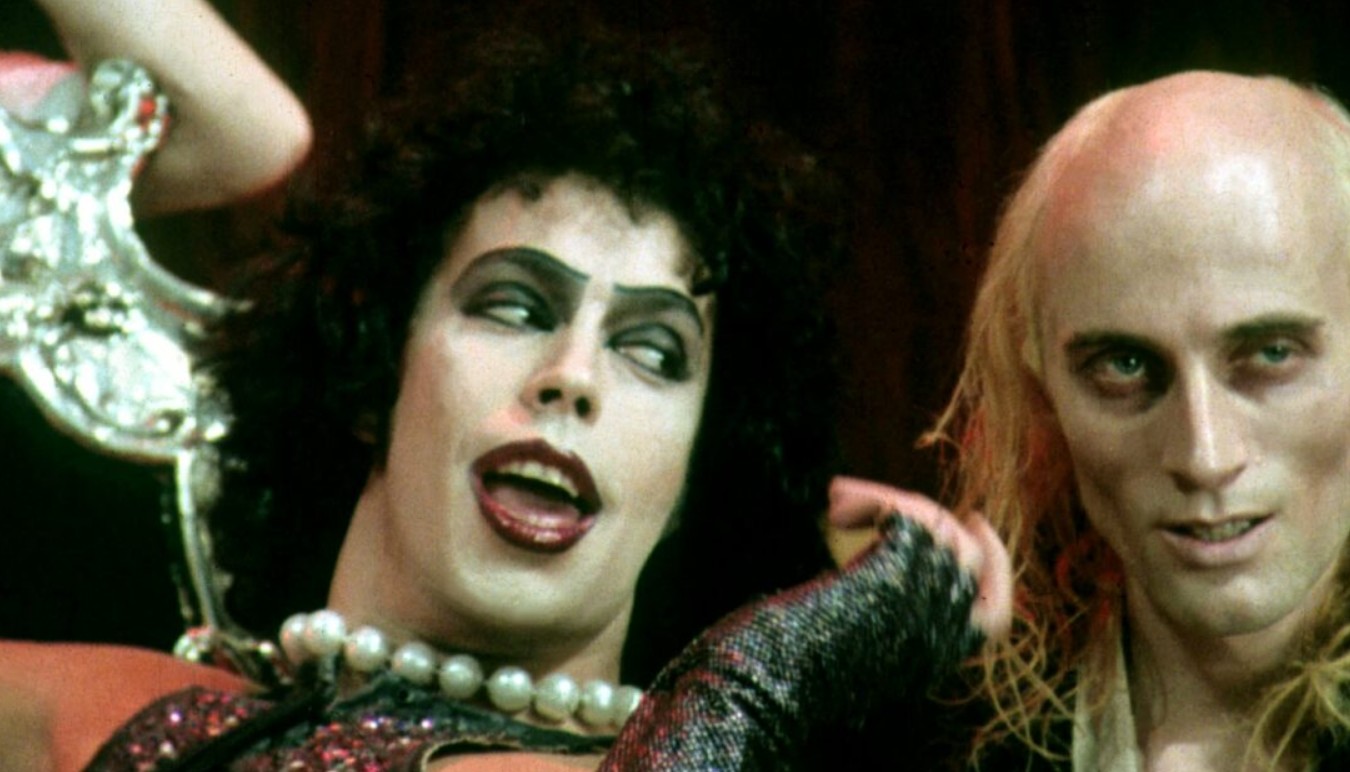
Tim Curry, who became a legend in the 70s as the flamboyant star of the cult classic “The Rocky Horror Picture Show”, died on Tuesday in Los Angeles. He was 80 years old.
Curry’s longtime manager, Marcia Hurwitz, confirmed to Variety that Curry died peacefully at his home in Toluca Lake. The cause of death is not yet known, but Curry had had several health problems since suffering a serious stroke in 2012.
Although the versatile English actor, singer and voice actor won a Daytime Emmy Award and was nominated for both Tony and Olivier Awards for a number of other roles, Curry’s career was defined by his vicious role as Dr. Frank N. Furter—the “cute transvestite from transsexual Transylvania”—in Richard O’Brien’s quirky musical comedy.
Read: Transparent solar cells can turn windows into power plants
From the stage to the screen – and to immortality
He created the role on stage in London for director Jim Sharman, took it to theaters in Los Angeles and New York – and then to the screen in Sharman’s 1975 film, which first flopped but later gained new life as a cult film.
Like Boris Karloff and Bela Lugosi – whose interpretations of Frankenstein’s monster and Dracula in the 30s inspired “Rocky Horror” – Curry’s own image was forever marked by his performance as the bizarre, corset-clad mad scientist.
“It seemed like something that could be well received,” Curry said of the role in a TV interview from London in 1975. He added, prophetically:
“I was hesitant because, if it worked, it could be difficult to shake it off. But I’ve often thought that it wasn’t worth doing unless you took a risk.
More than one hit – but always Frank N. Furter
At the height of the “Rocky Horror” wave in the late ’70s, Curry was signed to A&M Records and released three rock albums, including “Fearless” (No. 53 in 1979) and “Simplicity” (No. 112 in 1981).
Although Curry will forever be the face behind thousands of “Time Warp” dances at midnight screenings around the world, he proved to be far more than a one-trick pony during a career that spanned more than half a century.
In 1968, he started his stage career with a performance in the London production of “Hair”. Towards the mid-70s, he excelled at the Royal Court Theatre, the Citizens Theatre and in other theatre companies – with roles in Shakespeare, Brecht, Büchner and Stoppard – before “Rocky Horror” made him a world star.
The theatre’s nobleman
Curry garnered great acclaim on stage:
- 1981: His role as Mozart in the New York production of “Amadeus” earned him a Tony nomination.
- 1982: The Pirate King in Drury Lane’s production of Gilbert and Sullivan’s “The Pirates of Penzance” secured him a Laurence Olivier Award nomination.
- He later returned to the stage as the swordless, drunken actor Alan Swann in the Broadway musical “My Favorite Year” – and as King Arthur in both the New York and London productions of “Monty Python’s Spamalot”.
Despite an extensive film and television career – and possibly because Frank N. Furter sits so indelibly in people’s minds – Curry never reached the great movie star status that his talent would suggest.
Movie highlights and cult status
He had strong roles as the villain Rooster Harrigan in John Huston’s musical “Annie” (1982) – and (under a thick layer of makeup that took five hours to apply) as the villain Darkness in Ridley Scott’s fantasy film “Legend” (1985).
He also starred (dryly and funnily) as the butler Wadsworth in the film adaptation of the board game “Clue” – which also achieved cult status after a weak start. On television, he is remembered as the villain Bill Sikes in the TV movie “Oliver Twist” (1982) and in the CBS series “Wiseguy” (1989).
Although Curry occasionally took dramatic roles in films such as “The Hunt for Red October” (1990) and “The Three Musketeers” (1993), comedy was his element. Among other things, he appeared as the hotel host Mr. Hector in “Home Alone 2” (1992), as Jigsaw in “Loaded Weapon 1” (1993), as Long John Silver in “Muppet Treasure Island” (1996), as the Russian terrorist Major Vladakov in “McHale’s Navy” (1997) – and as Gomez Addams in “Addams Family Reunion”.
The voice behind Pennywise and Captain Hook
On television, he won a Daytime Emmy for the voice of Captain Hook in the Fox series “Peter Pan and the Pirates” (1990–91). He also made an unforgettable impression as Pennywise the Clown in the first TV series based on Stephen King’s horror novel “IT” (1990).
However, his attempts to direct a live-action series were short-lived – both “Over the Top” (1997) and the revival of “Family Affair” (2002) were canceled after one season.
After 2000, Curry was often seen in supporting roles – especially in comedies such as “Charlie’s Angels” (2000) and “Scary Movie 2” (2001) – with some dramatic exceptions such as the horror film “Ritual” (2002) and the biopic “Kinsey” (2004).
Voice actor – even after the battle
From 1992 onwards, Curry was frequently used as a voice actor in animated films, including “FernGully: The Last Rainforest”, “The Pebble and the Penguin”, “The Rugrats Movie”, “Rugrats in Paris” and “The Wild Thornberrys Movie”.
This work came in handy after 2012, when a serious stroke chained him to a wheelchair. In his later years, voice work for cartoons and video games was his main source of income.
In a poignant flashback in 2016, Curry appeared as a narrator in the TV movie “The Rocky Horror Picture Show: Let’s Do the Time Warp Again,” in which Frank N. Furter was played by trans actor Laverne Cox. Four years later, at a fundraising event for Joe Biden’s presidential campaign in Wisconsin, he played Frank N. Furter in a live stage reading of “The Rocky Horror Show.”
From Cheshire to the world stage
Tim Curry was born on 19 April 1948 in Grappenhall, Cheshire. After his father’s death in 1958, the family moved to South London. As a young talented singer and actor, he earned a double degree in English and drama at the University of Birmingham.
His first professional theatre job was as “Woof” in “Hair”. Along the way, he got to know Richard O’Brien, who had been in the touring company. O’Brien showed Curry the script for a play he was writing – a musical parody of classic horror films and “old, dark house” films, with a comedic surface of post-sexual revolution frenzy.
Curry was confident that the play could be a hit. He sang “Tutti Frutti” by Little Richard during an audition – and was given the flamboyant lead role of Frank N. Furter by director Jim Sharman.
The road to cult status – and immortality
After great success in London, the American record producer Lou Adler brought the piece to the Roxy on the Sunset Strip in Los Angeles – where it went very well. But on Broadway, in the Belasco Theatre, the original New York production was a failure – only 45 performances.
When 20th Century Fox launched the film version starring Curry, O’Brien, Susan Sarandon, and Barry Bostwick, it seemed to be going the same way. Still—despite mixed reviews—Curry’s efforts were highlighted.
Roger Ebert wrote that the actor “bears a certain resemblance to Loretta Young in drag. He’s the best thing in the movie, maybe because he seems to have the most fun. He’s also an accomplished actor… until the climactic scene where everyone is sent into space, Dr. Furter has been the perfect hostess.”
Fox was ready to write off “Rocky Horror” after lousy test screenings – and sent it to a disappointing premiere in Columbus, Ohio. But the film’s press officer Tim Deegan spotted the success of John Waters’ “Pink Flamingos” at midnight screenings in Los Angeles.
“I was absolutely convinced that there was a midnight audience,” Deegan said. He convinced Fox CEO Alan Ladd Jr. – and in 1976, New York’s hip Waverly Theater began showing the film at midnight screenings.
When the Los Angeles Times wrote in 1990 about the film’s extraordinary second life, “The Rocky Horror Picture Show” had been running every weekend for 12 years at the Balboa Cinema in Newport Beach. The film then ran in around 175 cinemas in the United States, where ecstatic fans shouted lines, danced in the aisles in full costume – and threw rice, bread and frankfurters at the screen.
As Danny Sullivan wrote: “Rocky Horror is more of a show than a movie – because during the screenings, the art imitates the art.”
Tim Curry leaves behind one of the most distinctive and unforgettable footprints in film history. Frank N. Furter lives on – in Time Warp forever.