The European football organization Uefa is crystal clear that the behavior of corrupt FIFA president Gianni Infantino cannot be tolerated. – They understand that it will not be as easy as one might think and have contacted Arsene Wenger who has both integrity, a career as one of the best managers of all time and hero status far beyond Europe’s borders.
He was a pioneer in bringing players from poor and small football countries and making them stars in his more than two decades at Arsenal and before that in Monaco. “This is important now that the battle is outside Europe, we are already clear that FIFA needs a new president.
Fantastic Antonio Nusa can choose between the world’s biggest clubs, but probably listens to Ødegaard
FIFA’s presidential election will take place on March 18, 2027. There is still no declared challenger to Gianni Infantino – and the clock is ticking. By November 18 this year, a candidacy must be registered.
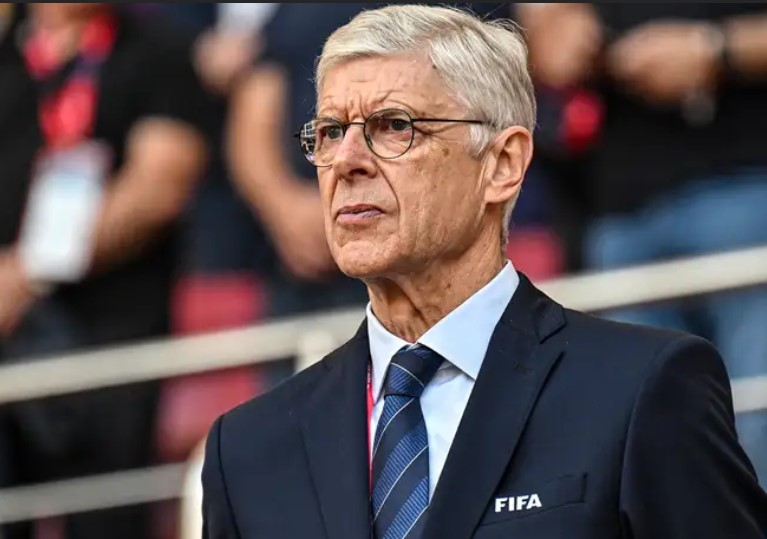
The European continental federation Uefa has now pointed out the name they prefer to see quietly: Arsène Wenger.
According to talkSPORT, the former Arsenal manager is Uefa’s top candidate – but it is unclear whether the Frenchman himself wants to run. The 77-year-old currently works as the head of global football development at FIFA.
Kozo Tashima, president of the Japanese Football Federation, has already announced that he intends to run in the election.
Requirements to become an official candidate
To get their candidacy official, the support of five football associations and approved qualification checks carried out by FIFA are required.
Previously, both the Asian Confederation (AFC) and the African Confederation (CAF) have announced that they support the re-election of Gianni Infantino as FIFA president.
Arsène Wenger’s career
Arsène Wenger joined Arsenal in 1996 as a relatively unknown Frenchman. 22 years later, he left the club as one of the Premier League’s most influential managers of all time – and as the man behind a number of football’s most successful player acquisitions.
Career before Arsenal
Wenger was born on October 22, 1949 in Strasbourg, and had a modest playing career before becoming a coach. He started as a youth coach in Strasbourg, before getting his first big chance as head coach at Nancy-Lorraine. However, it was in Monaco that he really broke through: in 1988, he led the club to the French championship and was named coach of the year. He also won the French Cup in 1991, and led Monaco to the final of the Cup Winners’ Cup in 1992.
After a successful spell in Japan with Nagoya Grampus Eight, he was appointed manager of Arsenal in September 1996.
Time at Arsenal: Titles and history
Wenger became the first non-British manager to win the Premier League when Arsenal secured the league title in 1998 – his first full season at the club. He followed that up with another double in 2002, before making football history in the 2003/04 season: Arsenal went unbeaten throughout the league season and became known as “The Invincibles” – the first club since 1889 to do so in the English top flight.
Wenger also led Arsenal to the Champions League final in 2006, where they lost to Barcelona. He was the architect of the club’s move to the Emirates Stadium in the same year. After nine years without trophies, Arsenal won the FA Cup in 2014 and 2015, giving the club a record 12 FA Cup victories.
In total, Wenger won three Premier League titles and seven FA Cups – the most by any manager in FA Cup history.
The players he shaped into stars
Wenger’s greatest legacy, however, is perhaps his ability to discover and develop players. He made his debut to over 80 players during his time at the club.
Patrick Vieira was brought in from AC Milan’s reserves for around £3.5 million before Wenger had formally taken office. He became one of the world’s most complete midfielders and the heart of Arsenal’s heyday.
Thierry Henry joined from Juventus in 1999 for approximately £10.5 million, after an unsuccessful spell there. Wenger retrained him from winger to striker – and Henry became Arsenal’s all-time leading scorer with 228 goals in 377 appearances.
Cesc Fàbregas was brought from Barcelona’s youth academy as a 16-year-old for a symbolic sum. He became Arsenal’s youngest first-team player and youngest goalscorer, developing into one of Europe’s best midfielders.
Robert Pires arrived from Marseille in 2000 for around £6-7 million. He became a key player in the “Invincibles” team and was named player of the year by the Football Writers’ Association in 2001/02.
Kolo Touré was bought from ASEC Abidjan for just £150,000 in 2002. He became a mainstay in defence and one of the most popular players of the “Invincibles” season.
Nicolas Anelka was signed from PSG for around £500,000 in 1996, developed into a top international striker, and was sold to Real Madrid for £22.3 million two years later – a huge profit.
Robin van Persie joined from Feyenoord for £2.75 million in 2004. He became Arsenal’s attacking leader, scoring 132 goals in 278 appearances, before moving to Manchester United.
Sol Campbell joined on a free transfer from arch-rivals Tottenham in 2001 – one of the most controversial transfers in Premier League history. He became a crucial part of the “Invincibles” defence.
Wenger’s legacy extends far beyond the trophies. His ability to see potential in young, unknown players – and shape them into world stars – is what in retrospect perhaps defines him the most.
Kozo Tashima is also challenging
Infantino has been a controversial man after a series of scandals, but is still in office before next year’s re-election. Now a challenger has been announced: Kozo Tashima is running as a counter-candidate to Infantino before the election in March. This is reported by The Athletic’s Rob Harris.
“I am grateful to be able to make this announcement with the full support of the Japan Football Association,” Tashima says – and continues:
“It’s not about winning or losing, but about clearly showing the outside world the honesty, sound foundation and integrity that Japanese football has built up to today.
Before Tashima can officially run as a candidate, the Japanese must secure the support of five football associations and pass the qualification checks from FIFA.
Read on Sporten: Football World Cup hero has been fired after a fight between two wives at a luxury café