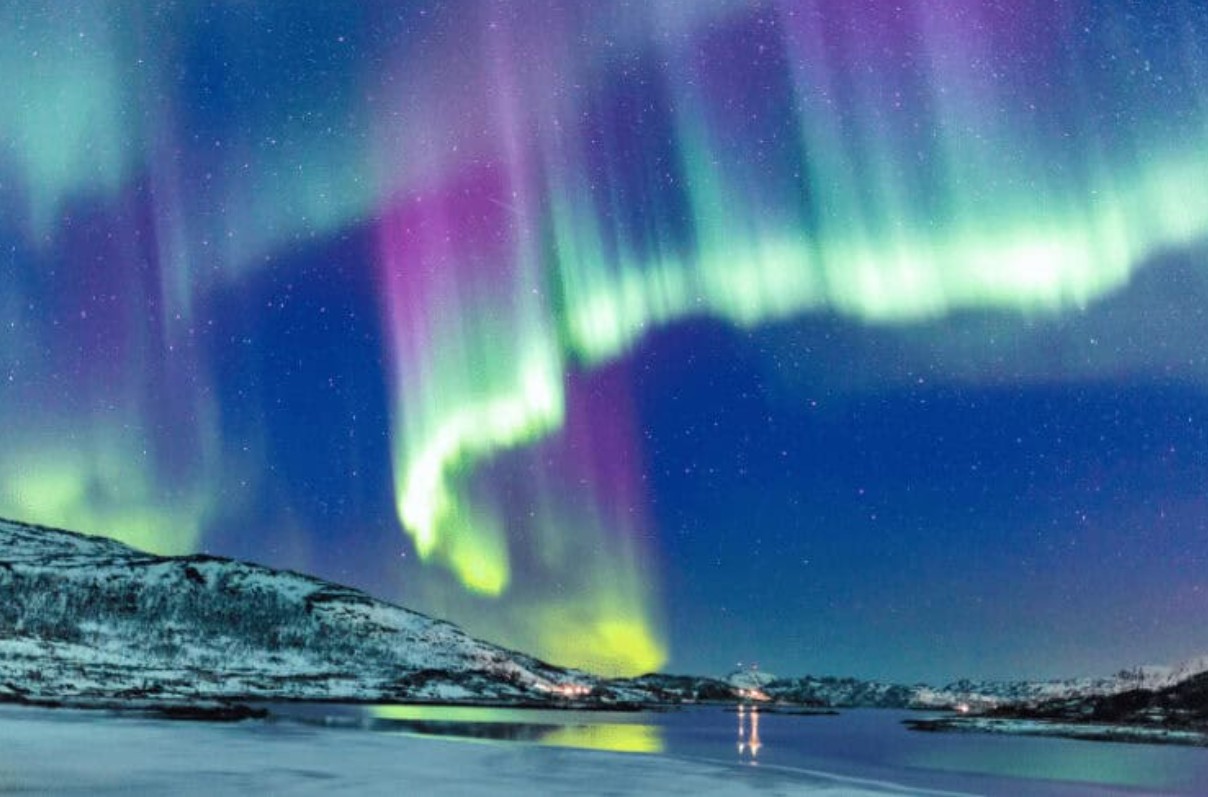
If you have ever wondered why the chance of meeting an Asian tourist is actually high in Northern Norway in midwinter, then the answer is Northern Lights. – Just as Dagbladet every sheep writes about the “Superflotten” which is life-threatening, Asian media tell about the magical Northern Lights.
Here is the overview presented by one of Asia’s largest online newspapers ahead of the “Northern Lights season”
Read: Lego’s “X-Files” set is here – with 1,478 pieces and a small Scully you can keep in your pocket
Northern Lights 2026–2027: Here are the best places and times to chase the light show
When should you go?
The Northern Lights season 2026–27 lasts from the end of September 2026 to the end of March – or the beginning of April 2027. The Northern Lights are only visible when the sky is really dark.
Some destinations, such as Finnish Lapland and Canada’s Yukon, may get the first glimpses as early as mid-to-late August.
Two periods stand out in particular:
- The equinox months (late September to October, and late February to March): Geomagnetic activity often increases around the equinoxes, the sky is dark enough, and temperatures are still manageable.
- Midwinter (November to January): The longest, darkest nights will give you the most hours of potential light show – although the weather can be harsher.
On any given evening, the ideal time is usually around local midnight, between 10 pm and 2:00 am. The shows come in fits and starts – from a few minutes to over an hour at a time.
Good to remember: Plan at least three to four nights in the same place. Patience and an extra night in reserve always pays off.
Where should you go? Top Destinations for 2026-27
The most reliable places are located just below the auroral oval – the ring around the magnetic north pole where the Northern Lights dance most nights of the season. Here are the main starting points for the winter ahead:
| Destination | Best months | Conditions | Why go here |
|---|---|---|---|
| Tromsø, Norway (approx. 69°N) | September–October and February–March | Milder coastal air, some clouds; polar night from late November to mid-January | In the middle of the Northern Lights oval, easily accessible, many organized tours |
| Reykjavik and Iceland (approx. 64°N) | September–October and February–March | Mild but very changeable weather | Easily accessible, dramatic scenery – drive out of the city lights |
| Rovaniemi and Finnish Lapland (approx. 66°N) | Late August to early April; Peak September–March | Cold, dry inland air, clearer skies | Up to 200 Northern Lights nights a year; glass igloos and Santa’s home |
| Abisko, Swedish Lapland (approx. 68°N) | End of September to end of March | Very cold and dry; Famous “blue holes” with clear skies | Statistically speaking, the clearest sky in the region; Aurora Sky Station |
| Yukon, Canada (approx. 61°N) | Mid-August to mid-April; Peak December–March | Very cold, dry, often cloudless | Dark wilderness, low light pollution, dedicated observation camps |
The destinations in detail
Tromsø, Norway
At 69 degrees north, Tromsø is located in the middle of the Northern Lights oval – and is one of the most accessible starting points for Northern Lights hunting. Here you will find everything from organized tours to warm-up bases. During the polar night, from late November to mid-January, the sky is dark around the clock. The coastal climate provides milder winter temperatures, but also more cloud cover – so it can be worthwhile to drive inland to find clear skies.
Reykjavík and Iceland
Iceland combines the Northern Lights with waterfalls, geothermal baths and volcanic scenery – and is a short flight from both Europe and North America. Reykjavik itself has too much light for the best shows, so head out to darker spots like Þingvellir National Park or Grotta Lighthouse. The weather in Iceland is notorious for changing in a matter of minutes, so be flexible and keep an eye on the cloud cover.
Rovaniemi and Finnish Lapland
In the northernmost part of Finland, the Northern Lights dance across the sky up to 200 nights a year. Rovaniemi, the capital of Lapland located right on the Arctic Circle, sees the light about one out of three nights. The dry inland air makes for clearer skies than along the coast, and the famous glass igloos allow you to follow the show from a warm bed – plus this is Santa’s home, making it a favourite for families with children.
Abisko and Swedish Lapland
Abisko is known for its “blue hole” – an area of persistently clear skies, thanks to the rain shadow from the surrounding mountains. This microclimate statistically provides clearer nights than anywhere else in Scandinavia, and many photographers rank Abisko as the best Northern Lights spot in Northern Europe. The Aurora Sky Station, which is reached by chairlift, provides you with an elevated and dark viewing platform. Most travel via Kiruna and base themselves near the national park.
Yukon, Canada
For a North American alternative, Canada’s Yukon offers vast, dark wilderness and cold, dry – and often cloudless – nights. The season starts as early as mid-August and lasts until mid-April, with the long, dark nights from December to March being the most rewarding. Whitehorse is a convenient base, with trips out to purpose-built observation camps.
How to maximize your chances
Being in the right place at the right time is half the job. These habits will take you the rest of the way:
- Avoid light pollution. Even a short drive out of the city can make a faint Northern Lights visible. Find an open space with an unobstructed view to the north.
- Check the cloud cover. Clouds are the Northern Lights hunter’s biggest enemy. Keep an eye on local weather forecasts every night – and be ready to move.
- Learn the Kp-index. It measures global geomagnetic activity from 0 to 9. The higher the number, the further south the light spreads. If you are already in the Northern Lights zone, even Kp 2-3 can put on a great show.
- Use Northern Lights Warning Apps. Short-term forecasts from NOAA and popular apps show when activity picks up.
- Give it time. Let your eyes get used to the darkness for 15-20 minutes, stay outside around local midnight – and plan for several nights so that one cloudy evening doesn’t ruin your entire trip.
| Kp-index | What it means |
|---|---|
| Kp 0–2 | Quiet Northern Lights – best in Tromsø, Abisko, Lapland and Yukon |
| Chapters 3–4 | Active – strong shows all over Iceland and Scandinavia |
| Kp 5 and up | Geomagnetic storm – the Northern Lights can reach lower latitudes |
Are the Northern Lights still worth chasing in 2026?
Yes, absolutely. On October 15, 2024, NASA and NOAA announced that the Sun had reached solar maximum – the most intense point in its approximately 11-year cycle. Solar activity is now gradually decreasing towards the end of solar cycle 25, with the next cycle expected to start somewhere between 2029 and 2032.
But the years immediately after a solar peak still produce frequent and powerful geomagnetic storms. This means that the winter of 2026–27 is still within a strong time window for Northern Lights sightings – even if the shows are not quite as intense and frequent as at their peak in 2024.
Frequently asked questions
Where is the best place to see the Northern Lights?
The destinations under the Northern Lights oval are the most reliable: Tromsø, Abisko, Finnish Lapland, Iceland and Canada’s Yukon. Abisko stands out with its unique “blue hole” microclimate, which provides statistically clearer skies than most other places.
How many nights should I plan?
Aim for at least three to four nights in the same place. Both weather and solar activity vary from night to night – more evenings simply give a better chance of a clear, active sky.
Plan your Northern Lights trip in 2026-27
The 2026–27 season offers a rare combination: continued elevated solar activity and the reliable, dark skies of the Arctic winter. Choose a base under the auroral oval, set aside a few nights of flexibility – and follow the clear weather.
When you’re ready, compare prices and accommodation to Tromsø, Reykjavik, Rovaniemi, Kiruna and Whitehorse – and secure your own Northern Lights winter.
Oysters may become a new remedy for inflammation